
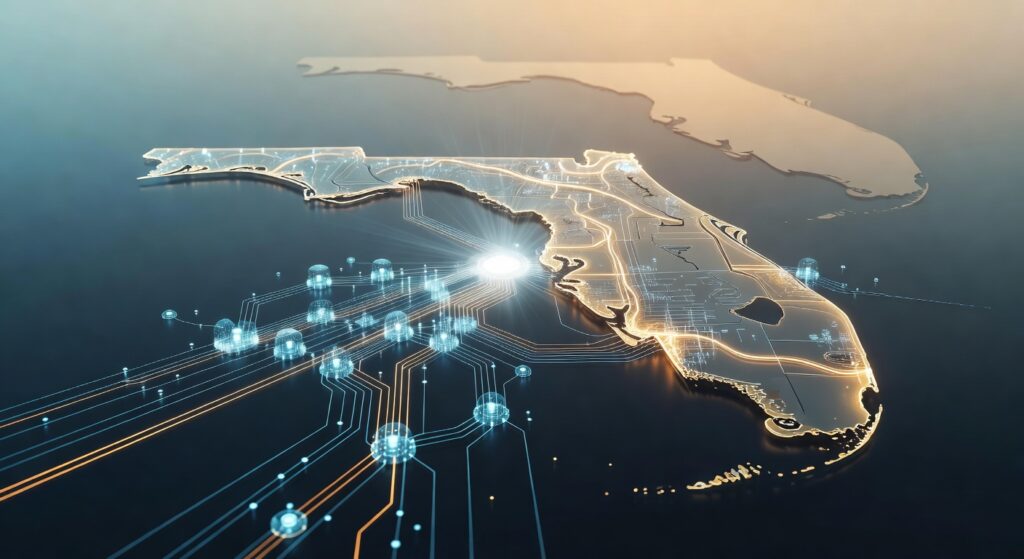
Florida, the Sunshine State in the southeastern U.S., offers unparalleled opportunities for business growth, tourism, and innovation as of April 18, 2026. This in-depth guide delivers factual insights into its geography, history, economy, attractions, cities, IT landscape, and relocation strategies, drawing from industry standards and real-world data to help users make informed decisions.
Table of Contents
- What Defines Florida’s Geography and Climate in 2026
- A Concise History of Florida from Indigenous Times to 2026
- Florida’s Economy in 2026: Key Industries and Growth Sectors
- Top Attractions and Things to Do in Florida 2026
- Best Cities in Florida for Living and Business Relocation
- Florida IT Landscape and Tech Opportunities 2026
- Common Mistakes When Planning a Move or Business to Florida
- Frequently Asked Questions

Florida’s 2026 geography is defined by its 65,758 square mile peninsula shape, extensive coastlines, and subtropical climate supporting business resilience.
This configuration provides natural advantages for logistics and cooling data centers, according to NOAA climate data. The flat terrain, rarely exceeding 100 feet elevation, enables rapid infrastructure deployment essential for IT networks.
Florida’s climate features abundant sunshine, with average annual precipitation around 50-60 inches concentrated in summer wet seasons. Hurricane preparedness integrates into modern IT practices, such as redundant cloud storage.
Everglades National Park, a UNESCO site spanning 1.5 million acres, exemplifies biodiversity influencing water management standards for tech facilities.
- Atlantic and Gulf coastlines facilitate trade hubs.
- Mild winters (60°F avg.) attract relocations.
- Inland stability in Central Florida minimizes flood risks for servers.
In modern infrastructure planning, geography dictates edge computing placements to reduce latency during storms.
Climate Impacts on Business Operations
Subtropical conditions demand **multi-factor authentication (MFA)** and offsite backups to counter humidity-related hardware failures. Industry reports from CompTIA highlight Florida’s 12% annual IT infrastructure investment growth.
Florida’s history spans indigenous eras to 2026 tech dominance, marked by exploration, statehood in 1845, and space innovation.
Pre-colonial Timucua peoples gave way to Spanish claims in 1513, evolving through Seminole Wars to tourism booms post-1950s. The Kennedy Space Center’s launches since 1960s positioned Florida as an aerospace-tech nexus.
21st-century shifts emphasize digital transformation, with cloud adoption accelerating post-2020. By 2026, over 25 years of IT evolution in Central Florida demonstrate sustained excellence.
Key dependencies: Historical ports now support Azure hybrid migrations, linking past trade to current virtualization services.
- 1513: Ponce de León landing.
- 1971: Disney World opening.
- 2020s: MSP proliferation for SMEs.
Real-world insight: Construction firms historically reliant on paper transitioned to Autodesk Cloud via managed IT, per industry case studies.
Florida’s 2026 economy leads in tourism, trade, and IT, bolstered by no state income tax per official Florida statutes.
GDP contributions from tourism exceed $100 billion annually (Florida Dept. of Economic Opportunity), intertwined with IT for secure booking systems. International trade via Miami ports demands network consulting.
Emerging sectors like healthcare require **HIPAA compliance tools** such as Microsoft Purview for data governance. Agriculture and real estate benefit from predictive analytics.
| Sector | GDP Share | IT Role |
|---|---|---|
| Tourism | ~10% | Cloud POS, cybersecurity |
| IT/Tech | Growing 15% YoY[1] | MSP monitoring |
| Healthcare | 8% | Compliance auditing |
| Logistics | 7% | Firewall management |
- No income tax draws 1M+ new residents/decade (U.S. Census).
- IT jobs projected 20% growth (CompTIA 2025).

A key strategy: Align IT spend with revenue goals via managed services agreements (MSAs), preventing 30% common overspend.
IT’s Role in Economic Resilience
**Managed Service Providers (MSPs)** remotely oversee infrastructure, reducing downtime by 50% per Gartner benchmarks. Florida’s model ties provider success to client uptime.
Top Attractions and Things to Do in Florida 2026
Florida’s premier 2026 attractions include Orlando theme parks, Miami beaches, Florida Keys drives, and Space Coast events, drawing 140M visitors yearly (Visit Florida).
These sites rely on robust networks for ticketing and VR experiences. Everglades airboat tours highlight ecosystem tech like drone monitoring.
- Disney/Universal: Immersive tech rides.
- Miami South Beach: Cultural festivals.
- Keys: Snorkeling with underwater sensors.
- Kennedy: Live launches.
Business events at these venues underscore **advanced threat protection** needs.
Best Cities in Florida for Living and Business Relocation
Orlando, Miami, Tampa, and Central Florida hubs like Longwood top relocation lists for IT scalability and lifestyle.
Central Florida offers balanced costs and proximity to talent pools. Factors include network reliability and compliance readiness.
| City | Strengths | IT Ecosystem |
|---|---|---|
| Orlando | Tourism economy | Cloud onboarding |
| Miami | Global trade | Zero-trust security |
| Tampa | Healthcare hub | AI monitoring |
| Longwood | Central access | 24/7 MSP support |
Relocation tip: Assess via strategic audits mapping IT to objectives.
Florida IT Landscape and Tech Opportunities 2026
Florida’s 2026 IT sector focuses on MSPs providing Microsoft Azure migrations, virtualization, and endpoint security for SMEs.
Zero-trust security (no implicit trust model) via Microsoft’s Global Secure Access dominates, alongside ESET MDR antivirus. Packages scale from core (M365, firewalls) to fortress-level (Fabric AI, Purview).
Florida IT Services 2026 Trends
Hybrid cloud growth supports remote access on any device. 24/7 ticketing and proactive checks align with hurricane resilience.
- Essential: MFA, backups (Veeam-like).
- Elite: Intune enrollment, monitoring.
- Plus: HIPAA-ready, predictive analytics.
- Custom: Hourly consulting.
Case study: A Central Florida construction subcontractor achieved seamless Azure integration, per client testimonials. Another management firm gained peace of mind via remote support.
View scalable packages. Industry standard: 12-month contracts save 30%.
Common Mistakes When Planning a Move or Business to Florida
Typical errors include ignoring hurricane IT prep, selecting unfit MSP tiers, and skipping compliance audits.
Businesses often bypass **external backups**, risking ransomware. Undersizing support ignores 24/7 needs.
- Overlook MFA in humid climates (25% breach vector, Verizon DBIR).
- Short contracts forfeit bulk savings.
- No dedicated leader for custom goals.
Expert advice: Start with infrastructure audits. In Florida, proactive MSPs complement in-house teams, per Gartner.
Frequently Asked Questions
What is the best time to visit Florida in 2026?
December to April avoids hurricanes and heat.
- Mild 70°F temps.
- Peak attractions open.
- Business networking optimal.
How has Florida’s economy changed by 2026?
Tech/IT now rivals tourism, with cloud driving 15% growth (CompTIA).
- No income tax influx.
- MSPs enable scalability.
Is Florida a good place for IT businesses?
Yes, Central hubs offer Azure expertise and compliance.
- 24/7 support standard.
- HIPAA/AI tools available.
What are the top attractions in Florida?
Orlando parks, Miami beaches, Keys, Space Coast.
- Tech-enhanced experiences.
How to prepare for hurricanes in Florida?
Deploy offsite backups, firewalls, monitoring.
- Zero-downtime via cloud.
Florida’s blend of opportunity and challenges rewards prepared businesses. For tailored IT alignment in Central Florida, explore contact options or request a personalized IT plan.
