
Encryption Services
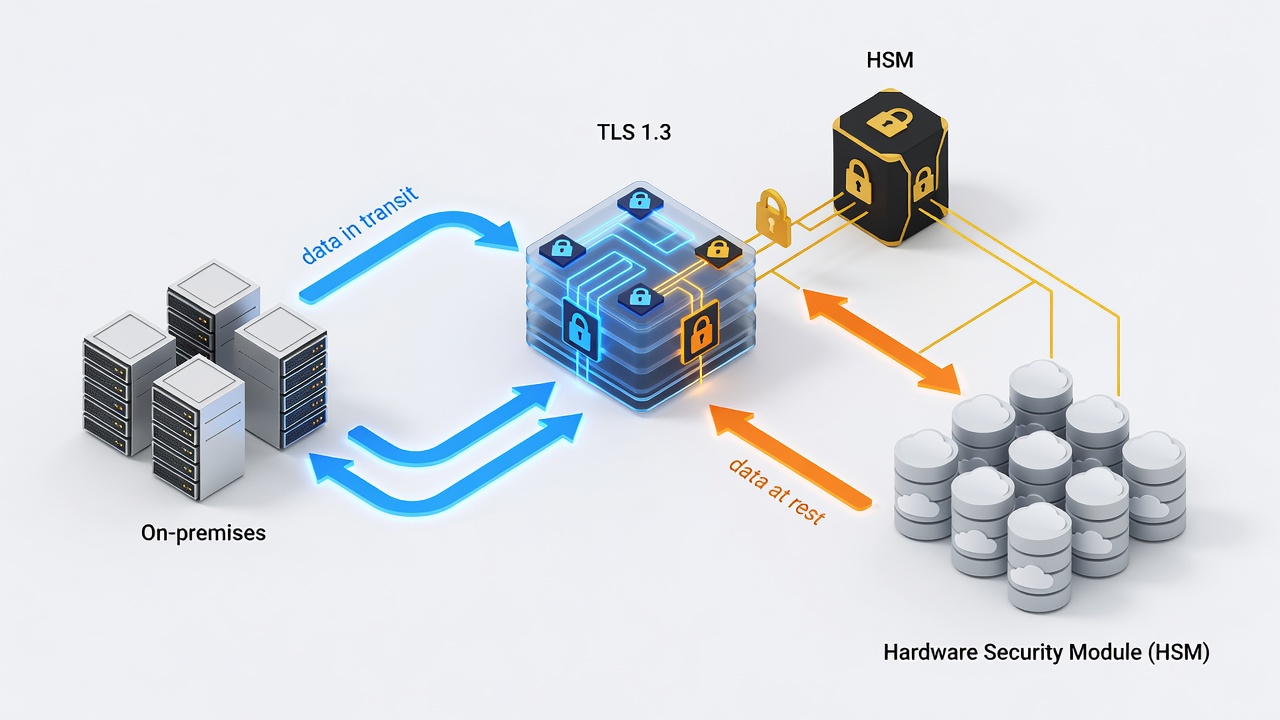
Encryption Services deliver enterprise-grade cryptographic protection by applying standardized algorithms such as AES-256 for data at rest and TLS 1.3 for data in transit, supported by centralized key management through hardware security modules to ensure compliance and data confidentiality across all environments.
Table of Contents
- Encryption Services Overview
- Core Components of Encryption Services
- Encryption Services Implementation Phases
- Compliance and Regulatory Alignment
- Common Pitfalls in Encryption Deployments
- Pro Tips for Maximizing Encryption Services Value
Encryption Services Overview
Encryption Services establish a comprehensive framework that applies cryptographic controls consistently across all data states and infrastructure layers. These services integrate directly with existing storage, network, and application environments to enforce data confidentiality without requiring wholesale system replacements. In modern business practice, Encryption Services reduce exposure to unauthorized access while supporting audit requirements through detailed logging of cryptographic operations. Real-world implementations demonstrate that organizations achieve measurable risk reduction by embedding Encryption Services into daily data flows rather than treating them as isolated add-ons.
Core Components of Encryption Services
Symmetric Encryption Protocols
Symmetric Encryption Protocols within Encryption Services rely primarily on AES-256 to secure large volumes of data efficiently. The protocol uses a single shared key for both encryption and decryption operations, delivering high performance for database encryption and file-level protection. According to industry standards, AES-256 remains the preferred choice for data at rest because it balances security strength with minimal computational overhead. In practice, Encryption Services apply these protocols at multiple layers, including volume encryption on storage arrays and column-level encryption within databases.
Asymmetric Encryption Methods
Asymmetric Encryption Methods in Encryption Services employ RSA and elliptic curve cryptography to enable secure key exchange and digital signatures. These methods allow parties to exchange encrypted information without sharing a secret key in advance, supporting secure communication channels and certificate-based authentication across distributed systems. Encryption Services configure these methods to protect initial key exchanges before symmetric sessions begin.
Key Management Infrastructure
Key Management Infrastructure forms the operational backbone of Encryption Services. Centralized key lifecycle management through hardware security modules ensures keys are generated, stored, rotated, and destroyed according to policy. This infrastructure prevents key sprawl and provides the audit trails required for regulatory reporting. Encryption Services integrate key management directly with identity platforms so access decisions remain tied to verified entities.
Encryption Services Implementation Phases
| Phase | Key Activities | Duration Estimate | Primary Owner |
|---|---|---|---|
| Assessment | Data classification and risk mapping | 2-3 weeks | Security team |
| Design | Algorithm selection and key architecture | 2 weeks | Architecture team |
| Deployment | Pilot rollout and integration testing | 3-4 weeks | Operations team |
| Optimization | Performance tuning and policy refinement | Ongoing | Security team |
A common mistake businesses make is attempting full-scale deployment without completing the assessment phase, which frequently leads to incompatible key policies and extended remediation work. Encryption Services address this by enforcing gated progression between phases.
Ready to strengthen your data protection posture with Encryption Services?
Compliance and Regulatory Alignment
Encryption Services align with major regulatory frameworks by enforcing documented cryptographic standards and maintaining verifiable key histories. In real-world implementations, organizations achieve consistent audit readiness by mapping encryption controls directly to requirements in standards such as NIST SP 800-57 and ISO 27001. Encryption Services also support sector-specific mandates through configurable logging and reporting modules that export directly to compliance platforms.
Common Pitfalls in Encryption Deployments
Many organizations underestimate the operational impact of key rotation schedules and fail to establish clear ownership for cryptographic policies. Encryption Services mitigate these issues through automated workflows and defined escalation procedures that maintain continuous data accessibility. Another frequent error involves neglecting legacy system compatibility, which Encryption Services resolve by providing translation layers and gradual migration paths.
Pro Tips for Maximizing Encryption Services Value
Encryption Services deliver maximum value when deployed with a clear data classification scheme and integrated monitoring that alerts on policy deviations in real time. Starting with non-critical datasets allows teams to refine procedures before protecting production workloads. Organizations that embed Encryption Services into change-management processes experience fewer disruptions and faster recovery from incidents.
Frequently Asked Questions About Encryption Services
How quickly can Encryption Services be deployed? Encryption Services deployment typically begins with a 2-3 week assessment phase followed by phased rollout, allowing full enterprise integration within 8-12 weeks depending on data volume and system complexity.
What algorithms are supported by Encryption Services? Encryption Services support AES-256 for symmetric encryption, RSA and ECC for asymmetric operations, and TLS 1.3 for transit protection, all managed through centralized key infrastructure.
How does Encryption Services handle key rotation? Encryption Services automate key rotation using hardware security modules with configurable policies that maintain continuous access while meeting compliance requirements for periodic re-keying.
Connect with a Specialist for Encryption Services here: https://foxcomputersolutions.com/contact
Related service areas: Cloud Computing, Cybersecurity, Data Backup Recovery
