
HIPAA Compliance Audit
A HIPAA Compliance Audit is a structured evaluation that examines an organization’s policies, procedures, and technical controls to determine alignment with the HIPAA Privacy Rule, Security Rule, and Breach Notification Rule for protecting electronic protected health information.
- Reviews administrative, physical, and technical safeguards
- Identifies risks to protected health information
- Delivers prioritized remediation recommendations
Table of Contents
- HIPAA Compliance Audit Overview
- Core Components Evaluated During a HIPAA Compliance Audit
- HIPAA Compliance Audit Process Steps
- Documentation Requirements for a HIPAA Compliance Audit
- Common Pitfalls Identified in HIPAA Compliance Audits
- Pro Tips for Preparing for a HIPAA Compliance Audit
- HIPAA Compliance Audit Deliverables and Next Steps
HIPAA Compliance Audit Overview
HIPAA Compliance Audit services provide organizations with an independent review of administrative, physical, and technical safeguards. The assessment identifies areas where protected health information may be at risk and delivers prioritized recommendations for remediation. In modern business practice, this evaluation supports both regulatory readiness and operational resilience. According to industry standards, regular assessments help covered entities maintain ongoing alignment with federal requirements while reducing the likelihood of enforcement actions.
The process begins with a comprehensive scope definition that maps all systems, applications, and workflows handling protected health information. Auditors then collect evidence through document review, interviews, and technical testing. Findings are compiled into a report that includes risk ratings and a clear remediation roadmap. This structured approach ensures that every aspect of the HIPAA Compliance Audit produces actionable insights rather than generic observations.
Core Components Evaluated During a HIPAA Compliance Audit
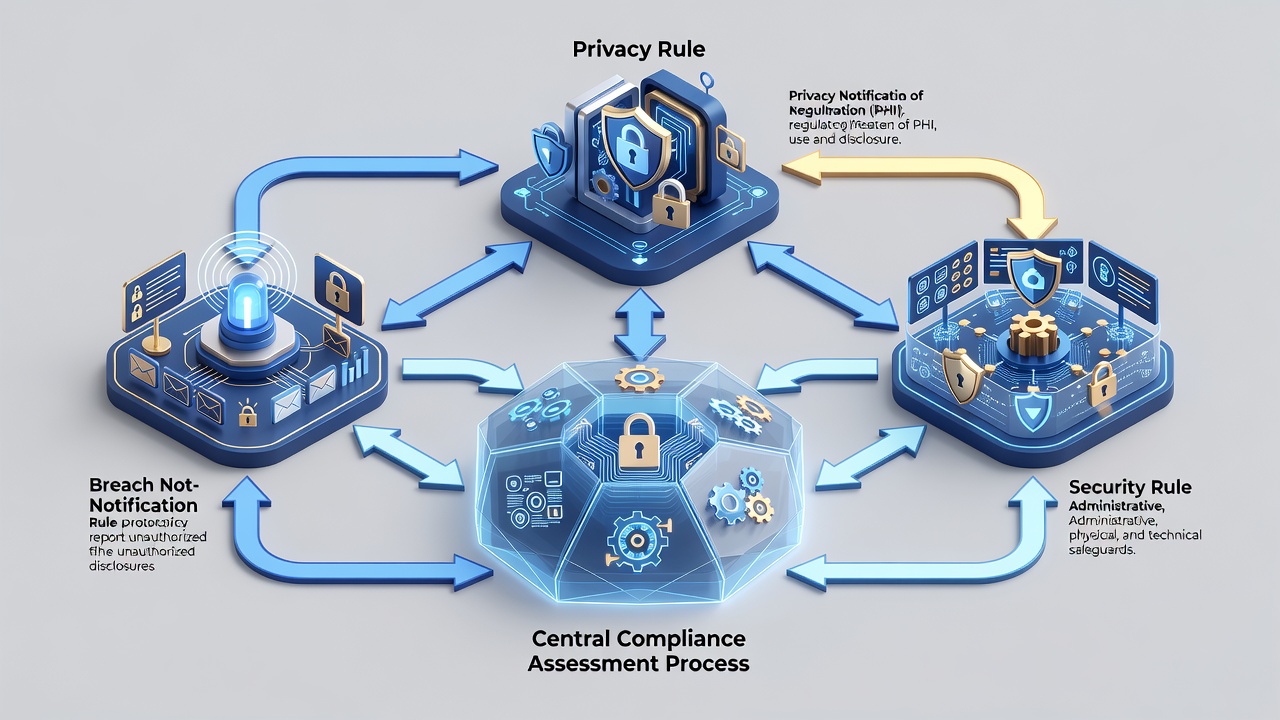
HIPAA Compliance Audit evaluations focus on three primary regulatory areas. Each area is examined through interviews, document reviews, and technical testing to produce objective findings.
Privacy Rule Assessment Elements
The Privacy Rule portion reviews notice of privacy practices, patient rights procedures, and minimum necessary standards for information access. Auditors verify that workforce members understand when and how protected health information may be used or disclosed.
Security Rule Assessment Elements
The Security Rule portion examines administrative safeguards such as workforce training, physical safeguards including facility access controls, and technical safeguards covering encryption and access management. In real-world implementations, organizations that maintain detailed access logs and conduct periodic reviews demonstrate stronger control environments.
Breach Notification Review Process
The Breach Notification portion verifies incident response procedures, risk of harm assessments, and timely notification protocols to affected individuals and regulatory bodies. A common mistake businesses make is failing to document the decision-making process behind breach determinations.
HIPAA Compliance Audit Process Steps
A HIPAA Compliance Audit follows a defined sequence of phases to ensure comprehensive coverage. The process begins with scoping and concludes with a formal report and remediation roadmap. Each phase builds upon the previous one to create a complete picture of an organization’s compliance posture.
| Audit Phase | Key Activities | Typical Duration | Primary Stakeholder |
|---|---|---|---|
| Scoping and Planning | Identify systems handling PHI | 1-2 weeks | Compliance Officer |
| Evidence Collection | Review policies, logs, and configurations | 2-4 weeks | IT and Privacy Teams |
| Testing and Analysis | Conduct interviews and vulnerability scans | 2-3 weeks | Audit Team |
| Reporting | Document findings and recommendations | 1-2 weeks | Project Lead |
Documentation Requirements for a HIPAA Compliance Audit
Successful completion of a HIPAA Compliance Audit depends on access to current and accurate documentation. Organizations must supply policies, risk analyses, training records, and business associate agreements for review. Missing or outdated documents often extend the audit timeline and increase the number of findings.
Key documents include the most recent risk analysis, evidence of security incident response activities, and records demonstrating workforce training completion. Auditors also request network diagrams, system inventories, and access control matrices to understand how protected health information flows through the environment.
Common Pitfalls Identified in HIPAA Compliance Audits
Many organizations encounter recurring issues during a HIPAA Compliance Audit. These include incomplete risk analyses, outdated policies, and inadequate access controls that fail to restrict unnecessary PHI exposure. Another frequent gap involves insufficient monitoring of business associate activities.
A common mistake businesses make is treating the audit as a one-time event rather than an ongoing program. Without continuous monitoring, organizations often discover the same findings in subsequent assessments, leading to repeated remediation efforts and potential regulatory scrutiny.
Pro Tips for Preparing for a HIPAA Compliance Audit
Preparation improves audit outcomes. Conducting an internal gap assessment before the formal review allows teams to address obvious deficiencies. Maintaining version-controlled policy documents and performing regular access reviews further strengthens readiness.
In real-world implementations, organizations that assign a dedicated project manager and maintain a centralized compliance repository complete audits more efficiently. Regular tabletop exercises focused on breach scenarios also help teams respond confidently when auditors request incident documentation.
HIPAA Compliance Audit Deliverables and Next Steps
A HIPAA Compliance Audit concludes with a detailed report containing findings, risk ratings, and a remediation plan. Organizations receive a prioritized list of actions along with suggested timelines for implementation. The report also includes an executive summary suitable for presentation to leadership and board members.
Ready to schedule a HIPAA Compliance Audit tailored to your organization’s environment?
Contact Fox Computer Solutions to receive a customized HIPAA Compliance Audit scope and timeline. Connect with a Specialist for HIPAA Compliance Audit here.
Related service areas: Managed IT Services, Cloud Computing, Cybersecurity.
