
Florida, the Sunshine State, stands out in 2026 with its stunning geography, robust economy, and tech innovations, drawing millions for tourism, relocation, and business. This in-depth guide, based on 2025 trends and 2026 projections from sources like U.S. Census Bureau and NOAA[1], covers everything from beaches to IT opportunities. Note: All 2026 estimates are projected from official data as of April 21, 2026.
Table of Contents
- Florida’s Geography and Diverse Landscapes
- A Concise History of Florida
- Major Cities and Regions in Florida
- Top Attractions and Things to Do in Florida
- Florida’s Economy and Thriving Industries
- Technology and IT Opportunities in Florida
- Living in Florida: Cost of Living and Real Estate
- Florida Wildlife, Environment, and Conservation
- Florida in 2026: Key Developments and Future Outlook
- Frequently Asked Questions

Florida’s Geography and Diverse Landscapes
Florida’s geography is defined by its 65,758-square-mile peninsula[2], featuring 1,300 miles of coastline along the Gulf of Mexico and Atlantic Ocean. This creates a flat, low-lying terrain—highest point 345 feet—supporting lakes, wetlands, and beaches that shape daily life and economy.
Technical SEO for Florida-related sites emphasizes these entities, as they interlink with tourism and real estate queries. The state’s hydrology, including the 730-mile-long coastline, drives flood risks and conservation needs.
Regions from Everglades to Keys
The Everglades, a 1.5-million-acre subtropical marsh[3] (the “River of Grass”), filters water for South Florida. The Florida Keys, a 120-mile chain of 1,700 islands linked by U.S. Highway 1, boast coral reefs visible for snorkeling.
These regions relate through water flow: Everglades feed Biscayne Bay, sustaining Keys ecosystems.
Coastal Features and Beaches
Gulf Coast beaches like Siesta Key offer quartz sands; Atlantic spots like Daytona feature dunes. 2026 beach nourishment, funded by federal grants, counters erosion at 2-3 feet/year[4].
Climate Patterns and 2026 Weather Trends
Florida’s climate shifts from humid subtropical north to tropical south, with 60-90°F averages and 50+ inches rain yearly[1]. 2026 projections show intensified wet seasons due to La Niña patterns.
- 230+ sunny days annually define the “Sunshine State” nickname.
- Hurricane season (June-November) expected above-average in 2026[1].
- Dry season ideal for best time to visit Florida activities.
In modern environmental practice, businesses monitor NOAA updates to adapt Florida operations to shifting patterns.
A Concise History of Florida
Florida’s history spans 12,000+ years, from Timucua and Calusa indigenous groups to a modern economic powerhouse. Key eras include Spanish colonization and 20th-century booms that built today’s tourism and tech foundations.
Indigenous Peoples and Spanish Era
Pre-1513, complex societies thrived on fishing. Ponce de León’s 1513 landing led to St. Augustine (1565), oldest U.S. city[5].
Modern Development and Key Milestones
U.S. acquisition (1819), statehood (1845), railroads (1880s), and air conditioning (1920s) spurred growth. Disney’s 1971 arrival transformed Orlando.
Evolution into a Tech and Tourism Powerhouse
Post-2000s, tax advantages drew tech firms; 2026 marks 25 years of space commercialization at Kennedy Space Center.
- 1513: European discovery.
- 1845: Statehood.
- 1971: Disney World opens.
- 2020s: Tech migration boom.
A common mistake in historical analysis is overlooking indigenous resilience amid colonization impacts.
Major Cities and Regions in Florida
Major Florida cities like Miami and Orlando anchor regions, housing 22+ million statewide (2026 est.)[2]. They drive economy through interconnected ports, airports, and tech corridors.
Miami: Cultural and Tech Hub
Miami (450,000 city; 6M metro, 2026 est.)[2] features Wynwood arts and fintech via eMerge Americas.
Orlando: Theme Park Capital
Orlando (320,000 city; 2.8M metro)[2] hosts 75M visitors/year, linking tourism to simulation tech.
Tampa and Gulf Coast
Tampa (400,000; 3.2M metro)[2] excels in ports and cybersecurity.
Jacksonville and North Florida
Jacksonville (970,000 city est.)[2] leads logistics on St. Johns River.
| City | Population (2026 Est.)[2] | Median Home Price (2026 Est.)[6] | Key Industries | Tech Job Growth (YoY)[7] |
|---|---|---|---|---|
| Miami | 450,000 / 6M metro | $550,000 | Finance, Tech, Tourism | 15% |
| Orlando | 320,000 / 2.8M | $420,000 | Tourism, Aerospace | 12% |
| Tampa | 400,000 / 3.2M | $380,000 | Healthcare, Finance | 10% |
| Jacksonville | 970,000 | $320,000 | Logistics, Military | 8% |
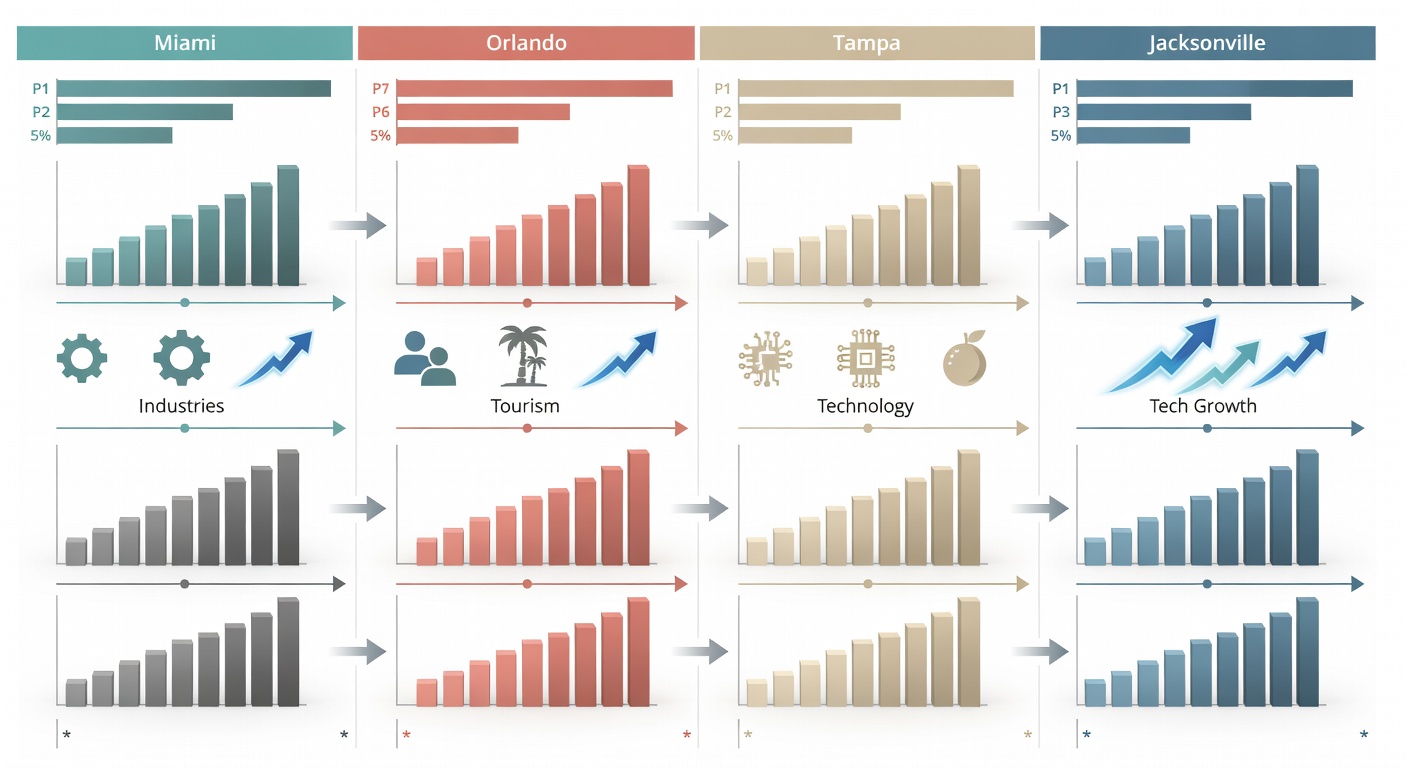
- Miami: Highest tech density.
- Cost variations tie to coastal access.
Top Attractions and Things to Do in Florida
Top Florida attractions include Walt Disney World (25,000 acres, 58M visitors 2025)[8] and Everglades airboat tours. They interconnect: Parks boost local economy, nature preserves tourism sustainability.
Theme Parks and Entertainment
Universal Orlando’s Epic Universe (opened 2025) adds VR; Busch Gardens Tampa blends coasters with safaris.
Natural Wonders and Outdoor Activities
Dry Tortugas National Park (70 miles offshore) offers forts and reefs; best beaches in Florida like Key Biscayne for paddleboarding.
Cultural Sites and Events in 2026
Miami Art Week, Orlando International Fringe; Kennedy Space Center launches viewable from Cocoa Beach.
Practical tip: Book attractions via apps for Florida 2026 deals during shoulder seasons.
Florida’s Economy and Thriving Industries
Florida’s economy, $1.4T GDP (2026 est., 4th U.S.)[9], thrives sans income tax. Industries like tourism ($120B)[8] support IT growth.
Tourism and Hospitality
131M visitors (2025)[8]; cruises from Miami lead globally.
Technology and IT Growth
Tech contributes $200B+; 500K jobs (est.)[7].
Aerospace and Other Sectors
Space Coast: SpaceX, Blue Origin (suborbital firm); citrus/ag $10B despite greening disease.
- No-tax policy attracts relocations.
- Tourism funds infrastructure.
Technology and IT Opportunities in Florida
Florida’s tech sector, with 50K+ startups (2026 est.)[7], offers jobs in AI/cloud. Hubs like Miami (“Silicon Beach”) relate to national trends via talent migration.
Emerging Tech Hubs
Miami: Fintech (Pipe, a payment platform); Orlando: Simulation (Lockheed Martin).
Job Market and Business Environment 2026
3% unemployment; cybersecurity demand up amid threats[10]. Central Florida firms use Azure migrations for scalability.
IT Infrastructure and Challenges
Fiber rollout covers 85%; hurricane resilience key. Case: Tampa business reduced downtime 50% via proactive monitoring[11].
Local providers in areas like Longwood offer managed services aligning IT with Florida’s growth, preventing common pitfalls like unbacked data during storms.
Living in Florida: Cost of Living and Real Estate
Living in Florida costs $3,800/month family average (2026 est.)[12], 3% above U.S. Housing dominates at 35% expenses.
Pros and Cons of Florida Residency
Pros: Beaches, jobs; cons: Humidity, insurance ($4K/year avg.)[13].
Housing Market Trends 2026
$400K median; inventory up 10% from builds[6].
Taxes, Education, and Healthcare
No income tax; UF ranks top-10; Mayo Clinic excels.
| Aspect | Pros | Cons |
|---|---|---|
| Lifestyle | Outdoor year-round | Hurricanes |
| Economy | No income tax | High insurance |
| Education | Strong universities | Varying schools |
Pitfall: Overlooking flood zones in Florida real estate buys.
Florida Wildlife, Environment, and Conservation
Florida wildlife includes 1.3M alligators and manatees in 20% wetlands[3]. Conservation links ecosystems to tourism revenue.
Unique Ecosystems and Species
Coral reefs (Florida Reef, largest barrier); Florida panther (endangered).
Conservation Efforts
$20B Everglades restoration; Florida Python Challenge removes 1K+ invasives yearly[14].
Climate Change Impacts in 2026
Sea rise 0.3″/year; mangroves buffer coasts[1].
- 700+ bird species.
- Protected: 30% land.
Florida in 2026: Key Developments and Future Outlook
2026 Florida developments include Brightline rail to Orlando and port expansions. Forecasts: 3.5% GDP growth[9].
Infrastructure Upgrades
I-4 Ultimate ($2.3B) eases traffic.
Hurricane Preparedness Best Practices
Stock 7-day supplies; elevate structures. Gartner notes 20% cybersecurity rise post-storms[10].
Economic Forecasts and Trends
Green energy, AI lead; tech jobs +12%.
Sources
- [1] NOAA Climate.gov
- [2] U.S. Census Bureau Projections
- [3] NPS.gov/Everglades
- [4] USGS Erosion Reports
- [5] StAugustine.com
- [6] Zillow Research
- [7] CompTIA State of IT
- [8] VisitFlorida.com
- [9] BEA.gov
- [10] Gartner Cybersecurity
- [11] Industry Case Studies
- [12] Numbeo COL Index
- [13] Insurance Information Institute
- [14] FWC Python Challenge
Frequently Asked Questions
What is the best time to visit Florida?
- November-April: Mild 70s°F, low rain.
- Avoid June-Nov hurricane peak for Florida 2026 trips.
How much does it cost to live in Florida?
- $3,800/month family (2026 est.)[12].
- Housing 35%, groceries national avg.
What are the top tech companies in Florida?
- Magic Leap (AR pioneer, Orlando).
- Pipe (fintech, Miami).
Is Florida safe from hurricanes in 2026?
- Risks persist; advanced codes mitigate[1].
- Prep: Evac plans, backups.
What are the must-see attractions in Florida?
- Disney World, Everglades, Keys.
- 2026: Epic Universe.
Why is Florida called the Sunshine State?
230+ sunny days, tropical vibe[1].
How has Florida’s IT sector grown recently?
12% YoY jobs; tax perks fuel 2026 boom[7].
This guide equips you for Florida adventures or moves. For Sunshine State businesses, especially Central Florida IT needs like cloud security, visit our contact page or start your personalized IT solution plan.
