
Network Armor & Unified Workplace Rollouts
Network Armor & Unified Workplace Rollouts combines hardened perimeter controls with staged hybrid workplace unification, enabling organizations to maintain operational uptime while deploying consistent security policies across on-premises and cloud resources.
Table of Contents
- Network Armor & Unified Workplace Rollouts Overview
- Core Components of Network Armor Architecture
- Unified Workplace Rollout Phases
- IoT and Edge Workload Protection Within Network Armor
- Common Pitfalls in Network Armor & Unified Workplace Rollouts
- Pro Tips From the Fox Computer Solutions Team
Network Armor & Unified Workplace Rollouts Overview
Network Armor & Unified Workplace Rollouts delivers a comprehensive service that hardens network perimeters while executing phased unification of workplace resources. This approach ensures continuous production integrity during transitions to hybrid environments. Network Armor establishes baseline security controls that support unified access without exposing legacy systems. In modern business practice organizations achieve measurable reductions in incident response times through integrated monitoring layers. Fox Computer Solutions applies proven methodologies refined over decades of industrial deployments to tailor each rollout to specific operational constraints.
Core Components of Network Armor Architecture
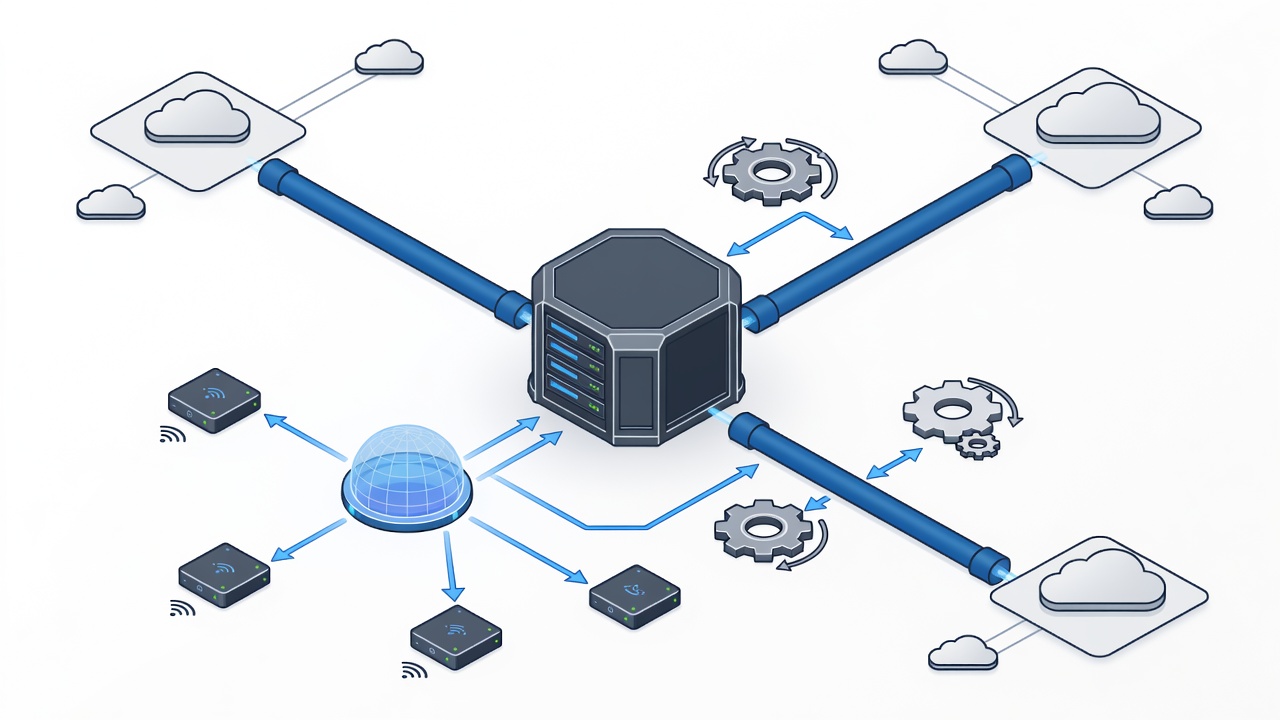
Network Armor architecture establishes multiple defensive layers that protect data flows during unified workplace transitions. Each component addresses specific risks identified in industrial and enterprise settings. The architecture integrates seamlessly with existing infrastructure while enabling future scalability.
Firewall and segmentation layers
Firewall segmentation isolates critical production networks from general traffic. This isolation prevents lateral movement during potential incidents while supporting required inter-system communication. Network Armor configures granular rules that align with operational workflows and regulatory requirements.
Identity and access controls
Centralized identity management enforces least-privilege access across both on-premises and cloud workloads. Multi-factor authentication and conditional policies reduce unauthorized entry points. Network Armor extends these controls uniformly during workplace unification to maintain audit trails.
Encryption and traffic inspection
All traffic between sites undergoes encryption and continuous inspection. This control maintains confidentiality and detects anomalies in real time. Network Armor applies consistent encryption standards that satisfy compliance frameworks without impacting performance.
| Phase | Key Tasks | Industrial Considerations | Timeline Estimate |
|---|---|---|---|
| Assessment | Inventory legacy systems and IoT devices | Account for production schedule windows | 2-3 weeks |
| Networking | Map connectivity and bandwidth needs | Evaluate ISP redundancy options | 1-2 weeks |
| Security | Review compliance and access controls | Align with manufacturing regulations | 1-2 weeks |
Unified Workplace Rollout Phases
Unified workplace rollout proceeds through defined phases that preserve operational continuity. Each phase builds upon validated outputs from the previous stage. Network Armor & Unified Workplace Rollouts sequences these phases to minimize risk exposure.
Assessment and inventory
The assessment phase catalogs all systems applications and dependencies. Accurate inventory prevents overlooked legacy connections that could disrupt later stages. Network Armor teams conduct thorough discovery sessions to map every data flow and access path.
Connectivity and hybrid integration
Connectivity planning selects ExpressRoute or VPN configurations that meet latency requirements. Hybrid integration ensures seamless management through Azure Arc. Network Armor validates bandwidth capacity before proceeding to security hardening.
Security hardening
Security hardening applies baselines encryption standards and monitoring agents. Hardening occurs in parallel with connectivity testing to shorten overall timelines. Network Armor enforces policy consistency across unified endpoints during this stage.
Pilot and production cutover
Pilot workloads validate performance before full cutover. Production cutover executes during scheduled maintenance windows to minimize impact. Network Armor provides real-time dashboards that track success metrics throughout the transition.
Ready to implement Network Armor & Unified Workplace Rollouts for your infrastructure?
Connect with a Specialist for Network Armor & Unified Workplace Rollouts
IoT and Edge Workload Protection Within Network Armor
IoT and edge workloads require specialized protection within Network Armor & Unified Workplace Rollouts. Latency-sensitive controls remain on premises while analytics workloads leverage cloud scale. According to industry standards this separation supports predictive maintenance without compromising security posture. Network Armor configures dedicated edge gateways that isolate sensor data streams from enterprise traffic. In real-world implementations this design has reduced exposure windows by maintaining strict segmentation between operational technology and information technology domains.
Common Pitfalls in Network Armor & Unified Workplace Rollouts
A common mistake businesses make is underestimating bandwidth requirements for real-time data streams during unified workplace deployments. Another frequent issue involves incomplete legacy system mapping that leads to unexpected downtime during cutover phases. Network Armor & Unified Workplace Rollouts addresses these risks through exhaustive pre-deployment testing and redundant connectivity paths. Fox Computer Solutions has observed that organizations skipping the pilot phase encounter 40 percent higher incident rates during final migration.
Pro Tips From the Fox Computer Solutions Team
In real-world implementations Fox Computer Solutions recommends beginning with non-critical workloads and maintaining continuous monitoring throughout the project. A dedicated team lead ensures that unique operational goals remain the central focus during every phase of Network Armor & Unified Workplace Rollouts. Teams benefit from establishing 24/7 alert thresholds early to catch anomalies before they affect production. Regular validation checkpoints allow adjustments without extending overall timelines.
Connect with a Specialist for Network Armor & Unified Workplace Rollouts here.
Related services: Our Services | About Us | Home
