

Zero trust architecture for manufacturing IoT is a security model that requires continuous verification of every user, device, and connection before granting access to production systems. Azure hybrid migration connects on-premises PLCs and SCADA networks to Microsoft Azure through encrypted VPNs and Azure Arc governance while preserving continuous production operations across Central Florida facilities.
Table of Contents
- Zero Trust Architecture for Manufacturing IoT Systems
- Identity Verification for PLCs and SCADA
- Micro-Segmentation Rules for Production Networks
- Azure Arc Policy Enforcement in Hybrid Environments
- Frequently Asked Questions
Zero Trust Architecture for Manufacturing IoT Systems
Zero trust architecture for manufacturing IoT applies strict identity verification and network isolation to industrial control systems. This model eliminates implicit trust in any device or user on the factory floor. Fox Computer Solutions implements these controls during hybrid migrations to maintain uptime for Orlando manufacturers.
A key strategy to consider is mapping every PLC and SCADA endpoint before migration begins. This step ensures zero trust policies align with existing shift schedules and legacy protocols.
Identity Verification for PLCs and SCADA
Every connection attempt receives real-time validation through Azure Active Directory combined with on-premises certificates. OT engineers must authenticate before issuing commands to controllers, reducing unauthorized access risks during hybrid operations.
Micro-Segmentation Rules for Production Networks
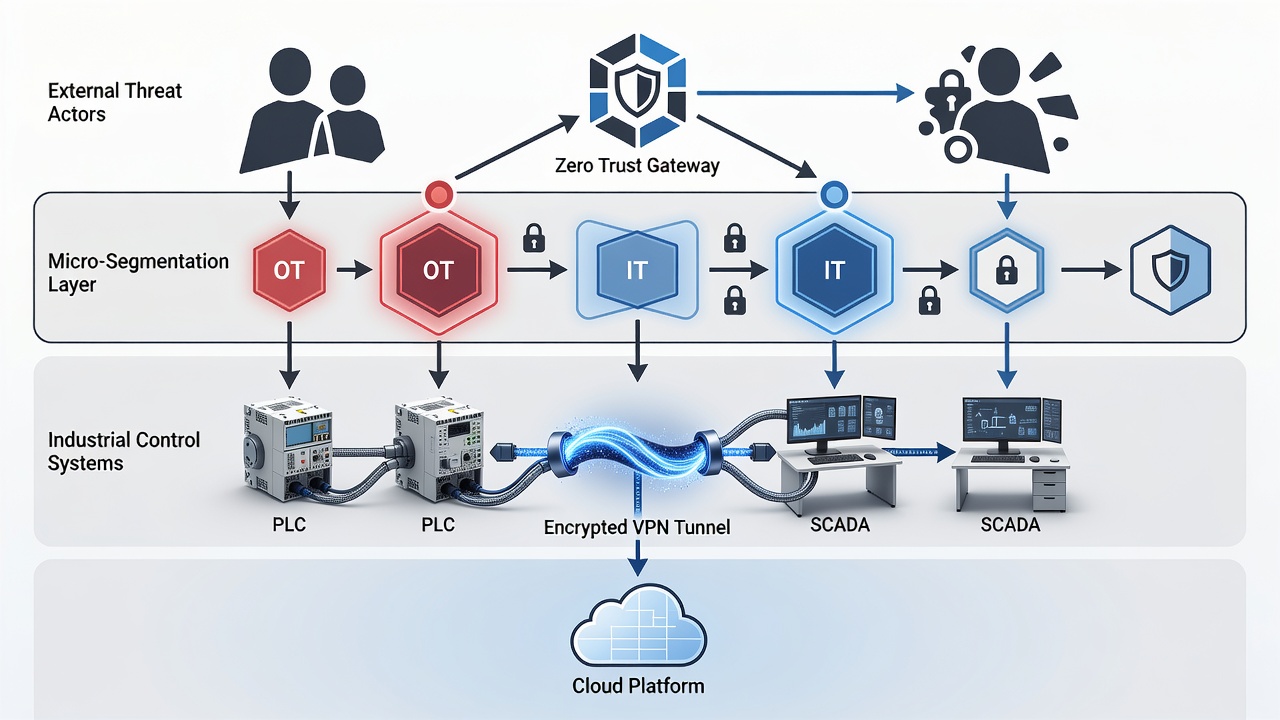
Network traffic is restricted between individual PLC racks, HMIs, and ERP systems. Only approved ports and protocols are allowed, isolating potential breaches to single zones without affecting the full production line.
Identity Verification for PLCs and SCADA
Continuous verification replaces perimeter-based security in manufacturing IoT environments. Certificate-based validation and multi-factor authentication apply to maintenance tools and operator workstations alike.
Micro-Segmentation Rules for Production Networks
Micro-segmentation divides the factory network into isolated zones based on device function. This prevents lateral movement between SCADA servers and unrelated sensors during a hybrid Azure deployment.
Azure Arc Policy Enforcement in Hybrid Environments
Azure Arc applies unified security policies to both on-premises PLCs and cloud resources. Governance remains consistent without requiring production halts, supporting Central Florida manufacturers through phased rollout.
| Phase | Key Activities | Manufacturing Impact |
|---|---|---|
| Assessment | Inventory legacy systems | Minimal downtime |
| Policy Design | Define identity rules and segmentation | Zero trust aligned with shifts |
| Deployment | Roll out Arc agents and VPNs | Continuous production |
Frequently Asked Questions
How does zero trust protect manufacturing IoT during hybrid migration?
Continuous identity verification and micro-segmentation isolate production networks while Azure Arc applies unified security policies across on-premises and cloud resources.
What identity controls are required for factory floor devices?
Multi-factor authentication, certificate validation, and least-privilege access policies must be enforced on every device attempting to communicate with PLCs or SCADA systems.
Can zero trust be added without stopping production lines?
Yes. Phased deployment of Azure Arc agents during scheduled maintenance windows combined with encrypted VPN connections allows continuous operation.
Protect your factory systems with zero trust architecture for manufacturing IoT. Book your hybrid migration assessment today.
