
Azure Migration Checklist for Manufacturers
An Azure migration checklist for manufacturers delivers a structured sequence for moving SCADA, PLC, and industrial IoT workloads to Microsoft Azure while preserving production uptime. The process covers infrastructure inventory, security controls, phased execution, and post-migration optimization for 2026 industrial environments.
Table of Contents
- Azure Migration Checklist for Manufacturers Overview
- Current Infrastructure Assessment for Manufacturing Environments
- Security and Compliance Planning for Azure Manufacturing Workloads
- Pro Tips for Successful Manufacturing Azure Migrations
- Common Pitfalls in Manufacturer Azure Migrations
- Step-by-Step Azure Migration Execution Phases
- Azure Services Recommended for Manufacturers
Azure Migration Checklist for Manufacturers Overview
Manufacturers require a repeatable Azure migration checklist that accounts for operational technology constraints and continuous production demands. This checklist integrates assessment, security mapping, and phased cutover to deliver predictable outcomes. Fox Computer Solutions has supported manufacturing clients with Microsoft Azure projects for over 25 years, achieving a 100 percent success rate on every engagement.
Current Infrastructure Assessment for Manufacturing Environments
Current infrastructure assessment for manufacturing environments begins with a complete inventory of OT and IT assets. Teams document every PLC, SCADA server, historian, and network segment before any migration planning starts. This foundational step prevents downstream compatibility issues and establishes baseline performance metrics.
Inventory of OT and IT Assets
Asset inventory lists all controllers, sensors, and supervisory systems with firmware versions and communication protocols. Accurate records prevent compatibility issues during later Azure integration phases. In real-world implementations, incomplete inventories have extended project timelines by weeks.
Dependency Mapping for Production Lines
Dependency mapping identifies real-time data flows between shop-floor equipment and enterprise systems. This mapping guides the order of migration and highlights critical paths that require parallel operation during transition. A common mistake businesses make is overlooking historian data dependencies that affect quality reporting.
| Azure Service | Manufacturing Use Case | Key Benefit | Migration Priority |
|---|---|---|---|
| Azure IoT Hub | Industrial sensor data ingestion | Real-time OT visibility | High |
| Azure Arc | Hybrid server management | Unified governance | High |
| Azure Data Factory | Historian data pipelines | Secure ETL at scale | Medium |
Security and Compliance Planning for Azure Manufacturing Workloads
Security and compliance planning for Azure manufacturing workloads establishes controls that satisfy NIST, ISO 27001, and FDA validation requirements from the first day of migration. According to industry standards, early mapping of controls reduces audit preparation time significantly.
NIST and ISO 27001 Controls
NIST and ISO 27001 controls are mapped to Azure native services including Key Vault, Sentinel, and Defender for Cloud. Each control receives documented evidence collection procedures before go-live. In modern business practice, manufacturers that embed these controls early achieve faster certification.
FDA Validation Requirements
FDA validation requirements are addressed through validated Azure environments with change control logging and electronic signature support. Documentation templates align directly with 21 CFR Part 11 expectations. Fox Computer Solutions applies dedicated team leaders to maintain these records throughout the project.
Pro Tips for Successful Manufacturing Azure Migrations
- Run a 30-day pilot on non-critical lines before touching primary production.
- Maintain parallel historian instances for at least 60 days after cutover.
- Automate rollback scripts for every migration stage.
- Schedule all major cutovers during planned maintenance windows.
Common Pitfalls in Manufacturer Azure Migrations
- Skipping OT protocol compatibility testing leads to extended downtime.
- Underestimating historian data volume causes unexpected Azure storage costs.
- Ignoring change management creates resistance from plant floor teams.
- Failing to validate backup and restore procedures before production move.
Step-by-Step Azure Migration Execution Phases
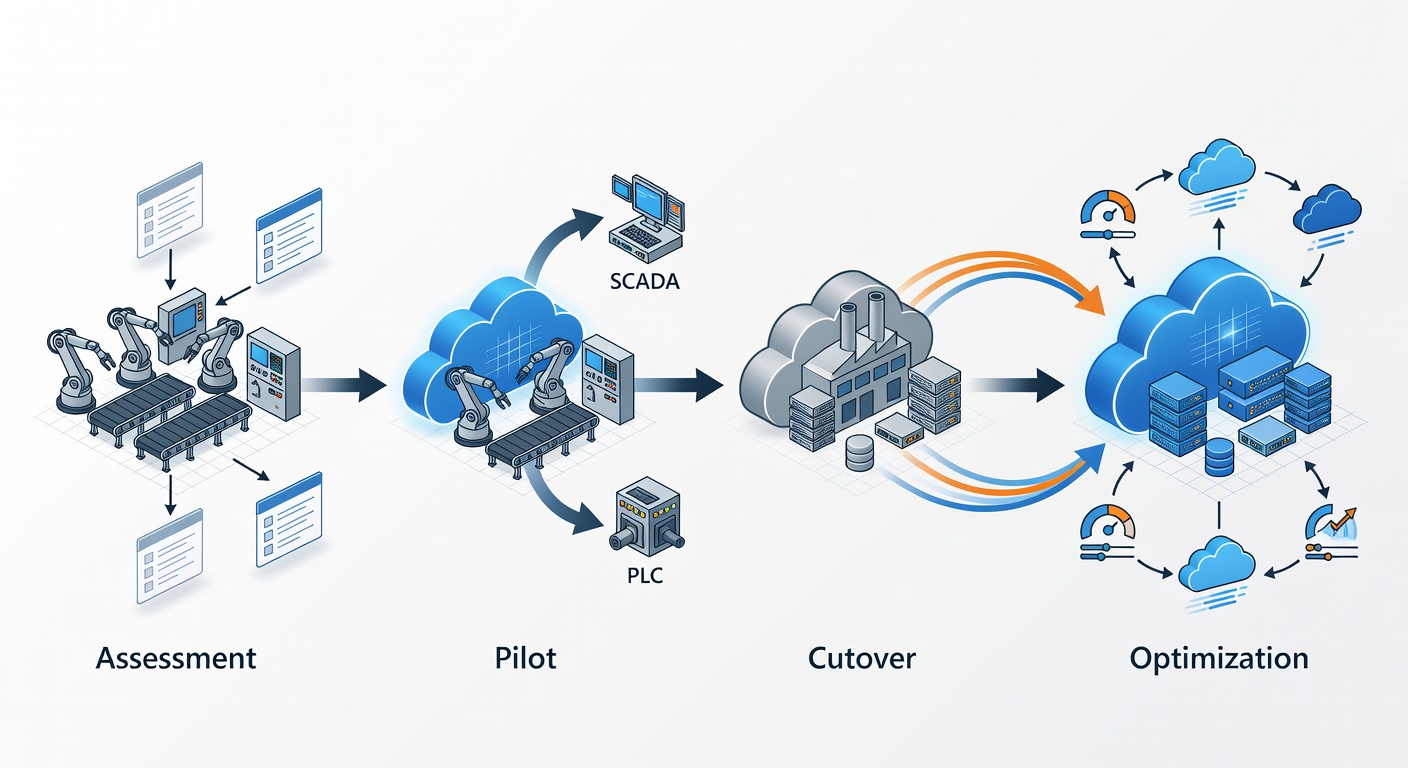
Step-by-step Azure migration execution phases divide the project into pilot, production cutover, and optimization stages that keep manufacturing lines operational. Each phase includes defined success criteria and rollback triggers.
Pilot Phase
The pilot phase tests connectivity, security policies, and data flows on a secondary production line. Results determine the final cutover playbook. Fox Computer Solutions 24/7 support team monitors every test in real time.
Production Cutover
Production cutover executes the validated playbook during a scheduled window with real-time monitoring and instant rollback capability. This approach has delivered 100 percent on-target results across all completed projects.
Optimization Phase
The optimization phase fine-tunes Azure resources, implements advanced analytics, and retires legacy hardware according to measured performance data. Manufacturers typically see measurable efficiency gains within 90 days of this phase.
Azure Services Recommended for Manufacturers
Azure services recommended for manufacturers include Azure IoT Hub for sensor ingestion, Azure Arc for hybrid governance, and Azure Data Factory for historian pipelines. Each service is selected for proven industrial workload compatibility. Fox Computer Solutions provides dedicated team leaders who align these services with specific company goals.
Ready to execute your Azure migration checklist for manufacturers?
Frequently Asked Questions
What timeline should manufacturers expect for full Azure migration?
Most manufacturing Azure migrations complete in 4 to 9 months depending on production line complexity and hybrid requirements.
How does Fox Computer Solutions minimize production downtime during Azure cutover?
Fox Computer Solutions uses phased pilot testing, parallel environments, and scheduled maintenance windows to achieve near-zero downtime.
Which compliance standards does Azure support for U.S. manufacturers?
Azure supports NIST, ISO 27001, and FDA validation requirements through dedicated compliance toolsets and audit logging.
Connect with a Specialist for azure migration checklist for manufacturers here: Book Your Strategic Session
Related resources: About Fox Computer Solutions
