

Florida, the Sunshine State, spans a unique peninsula with subtropical climate, booming economy, and rising IT hubs that attract businesses and residents. Navigating its geography, attractions, costs, and tech landscape requires clear insights to address challenges like hurricanes while capitalizing on growth. This guide provides factual, structured knowledge drawn from authoritative sources, optimized for decisions on living, working, or investing in Florida.
Table of Contents
- Florida’s Geography and Climate Fundamentals
- Historical Evolution of Florida
- Key Cities and Regions Driving Florida
- Florida’s Economy: Industries and Growth Drivers
- Premier Attractions and Experiences in Florida
- Cost of Living and Lifestyle in Florida
- Navigating Florida’s IT and Tech Ecosystem
- Overcoming Common Challenges in Florida
- Frequently Asked Questions
- Sources
Florida’s Geography and Climate Fundamentals
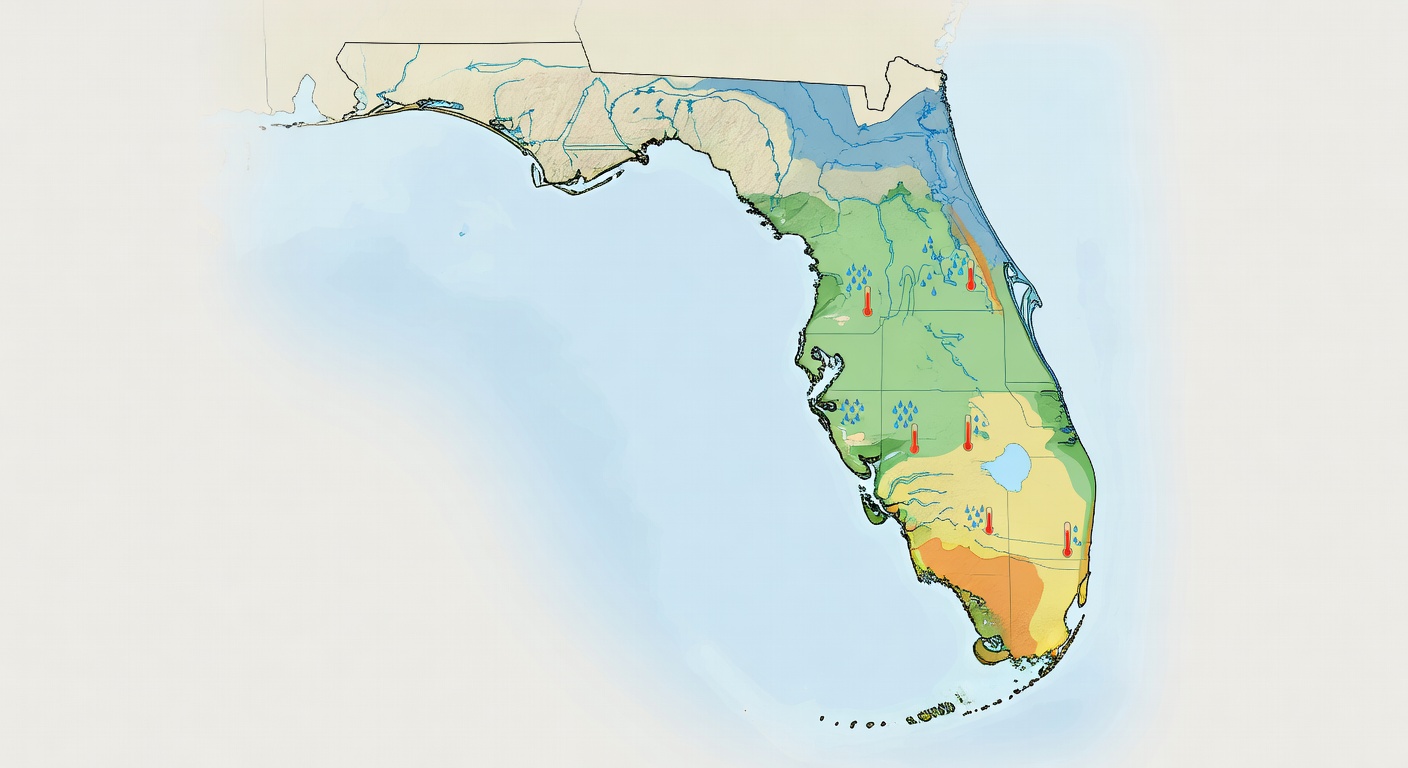
Florida covers 65,758 square miles as a peninsula between the Atlantic Ocean and Gulf of Mexico, featuring subtropical to tropical climates with average summer highs of 90°F and mild winters.[1] This geography supports biodiversity but poses IT challenges like humidity-induced hardware failures.
- 1,350 miles of coastline drive tourism and ports.
- Everglades: World’s largest subtropical wetland at 1.5 million acres.
- Hurricane-prone lowlands necessitate resilient infrastructure.
Strategic southeastern U.S. location enhances trade, linking geography to economic hubs. Climate zones transition from humid subtropical north to tropical south, impacting agriculture and data center cooling needs.[2]
Strategic Location and Borders
Bordering Georgia/Alabama north and ocean south, Florida serves as a trade gateway. This positions ports like Miami for global logistics, relying on secure IT networks.
Florida’s peninsular shape exposes 825 miles to Atlantic hurricanes, per NOAA data.[3]
Diverse Climate Zones from Subtropical to Tropical
North sees freezes; south averages 77°F yearly. High humidity (70-90%) accelerates corrosion, requiring specialized server enclosures in IT setups.
Iconic Natural Features like Everglades and Keys
Everglades (UNESCO site) filters water naturally; Keys’ coral reefs support marine tech monitoring. These features tie environmental conservation to sensor-based IT.
Transitioning from landforms, Florida’s history reflects adaptation to this environment.
Historical Evolution of Florida
Florida evolved from indigenous habitats to a 1845 statehood amid Spanish claims, Civil War neutrality, and 20th-century tourism/space booms shaping modern industries including IT.[4]
- 1513: Ponce de León claims for Spain.
- 1868: Reconstruction post-Civil War.
- 1950s-60s: NASA ignites tech corridor.
These milestones built resilient communities, informing current IT strategies for disaster recovery.
Indigenous Peoples and Spanish Colonization
Seminole and Calusa thrived pre-1500s; St. Augustine (1565) endures as oldest U.S. city.[5] Colonial forts pioneered early defense networks akin to modern firewalls.
19th-Century Development and Civil War Impact
Railroads post-1880s connected citrus regions; secession had minimal battles, preserving infrastructure growth.
20th-Century Boom: Tourism and Space Race
Disney (1971) and Kennedy Space Center revolutionized entertainment/simulations, precursors to AR/VR IT firms.
This foundation fueled urban expansion explored next.
Key Cities and Regions Driving Florida
Miami (442,897 pop.), Orlando (320,742), Tampa (403,364), and Jacksonville (985,843) propel Florida’s GDP through diverse sectors.[6]
| City | Population (2023)[6] | Key Industries | IT Presence | Median Home Price[7] |
|---|---|---|---|---|
| Miami | 442,897 | Intl. Trade, Tourism | Fintech, AI | $550,000 |
| Orlando | 320,742 | Entertainment, Logistics | Simulation Tech | $385,000 |
| Tampa | 403,364 | Finance, Ports | Cybersecurity | $420,000 |
| Jacksonville | 985,843 | Military, Logistics | Data Centers | $320,000 |
Miami: International Gateway
Miami-Dade metro (6.1M) handles 1M+ TEUs annually; fintech like blockchain thrives.[8]
Orlando: Entertainment Capital
Theme parks employ 75,000; simulation tech links to defense IT.
Tampa and Jacksonville: Industrial Powerhouses
Tampa’s Silicon Swamp (cyber cluster) and Jacksonville ports demand supply-chain software.
These cities underpin broader economic drivers.
Florida’s Economy: Industries and Growth Drivers
Florida’s $1.44 trillion GDP (2023) ranks 4th U.S., powered by tourism (140M visitors, $110B impact), agriculture ($170B), aerospace, and IT growing 8% yearly.[9][10]
- Tourism: 28% GDP contribution.
- Ag: Citrus #1 U.S.
- IT jobs: 500k+, cybersecurity focus.
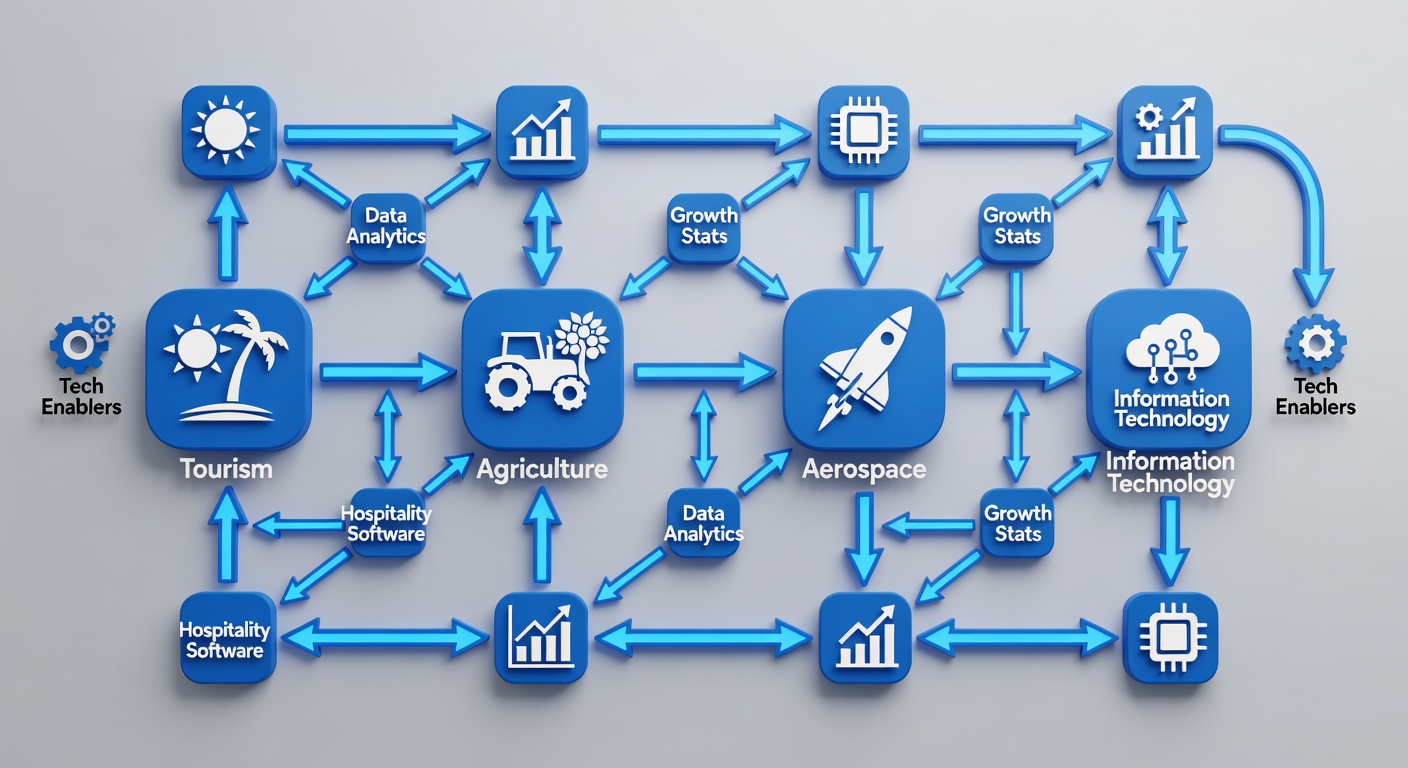
Economy links: Tourism platforms require scalable cloud; ag uses IoT sensors.
Dominant Sectors: Tourism and Agriculture
VisitFlorida drives bookings via apps; citrus employs precision ag tech.[11]
Aerospace and Manufacturing Strengths
Space Coast (Brevard Co.) hosts 17k jobs; simulations aid IT modeling.
Emerging Tech and IT Landscape
Entities: Magic Leap (Orlando AR), Chewy (fintech). Silicon Swamp: Tampa cybersecurity cluster.[12]
Attractions stem from this prosperity.
Premier Attractions and Experiences in Florida
Florida’s attractions include 825 miles beaches, Disney/Universal (75M visitors), Everglades, supporting $110B tourism.[10]
- Beaches: Clearwater #1 U.S.
- Parks: 170 state sites.
- Wildlife: Manatees, alligators.
World-Class Theme Parks and Beaches
Digital ticketing integrates AR experiences.
National Parks and Wildlife Encounters
Everglades monitors via drones/sensors.
Cultural and Outdoor Activities
Miami Art Basel, Keys diving enhance lifestyle.
These influence living costs.
Cost of Living and Lifestyle in Florida
Florida COL index 102.8 (national 100), housing 110, no income tax saves 5-7%.[13] 230 sunny days boost outdoor lifestyle.
- Housing: State median $405k.
- Jobs: Unemployment 3.3% (2024).[14]
- Healthcare: 200+ hospitals.
Housing and Daily Expenses Breakdown
Groceries +5%, utilities +15% AC-driven.
Job Market Trends
Tech adds 20k jobs 2023; avg salary $95k.
Healthcare and Education Quality
UF, FSU rank top; Mayo Clinic Jacksonville excels.
Tech ecosystem builds on this workforce.
Navigating Florida’s IT and Tech Ecosystem
Florida’s IT employs 500k, hubs in Tampa/Orlando focus cybersecurity/cloud; managed IT services (MSPs) provide monitoring/backups for SMEs.[15]
- Silicon Swamp: Defined as Tampa cyber innovation zone.
- Zero-trust access: Model verifying every request, ideal VPN alternative.
- Growth: 8.5% jobs 2019-2023.
In real-world implementations, Central Florida firms use Azure hybrids for 99.9% uptime during storms.
Major Tech Hubs and Innovations
Orlando: Simulation Valley; Tampa: USF tech park.
Benefits of Managed IT Services for Florida Businesses
MSPs offer 24/7 proactive monitoring, MFA-enabled Microsoft 365, ESET MDR antivirus, offsite backups vs. ransomware.[16] 12-month plans optimize costs 30%.
Cybersecurity Best Practices in Hurricane Zones
AI threat detection (e.g., Microsoft Fabric) predicts issues; post-Ian (2022), backups recovered data in hours for affected businesses.
Challenges demand such preparedness.
Overcoming Common Challenges in Florida
Florida contends with 15 hurricanes/century, 80% humidity, growth straining grids; solutions include redundant IT and compliance tools.[3]
- Common pitfalls: No offsite backups (lost 20% data in Ian).
- Avoid siloed IT during expansions.
- Underestimating flood risks for cabling.
Preparing for Hurricanes and Flooding
NFIB standards: Auto-failover clouds, generators.
IT Infrastructure Pitfalls for Businesses
Firms ignoring humidity fail hardware yearly; opt modular designs.
Expert Tips for Relocation and Expansion
Conduct IT audits mapping to goals; hybrid Azure suits Florida scale.
Frequently Asked Questions
What makes Florida’s IT sector attractive for businesses?
No income tax, 500k IT jobs, hubs like Silicon Swamp, and MSPs for Azure/cyber draw firms.[15]
How does Florida’s climate impact IT operations?
Humidity/hurricanes risk downtime; countered by climate servers, offsite backups, zero-trust.[3]
What are the top Florida cities for tech professionals?
Tampa (cyber), Orlando (sim), Miami (fintech) offer jobs, lower COL than CA.[6]
Is Florida a good place for starting an IT company?
Yes, tax perks, talent from UF/USF, growing demand for managed services.[14]
What IT services are essential for Florida businesses?
Cloud (Azure), antivirus (MDR), monitoring, compliance for hurricanes/ransomware.[16]
How to hurricane-proof IT in Florida?
Redundant backups, AI analytics, 24/7 MSP support ensure recovery.[3]
Sources
- [1] U.S. Census Bureau – Florida QuickFacts
- [2] NOAA Climate Data
- [3] National Hurricane Center
- [4] Florida Dept. of State
- [5] National Park Service
- [6] Census 2023 Pops
- [7] Zillow Home Values
- [8] PortMiami
- [9] BEA GDP 2023
- [10] Visit Florida
- [11] FL Dept. Ag
- [12] CompTIA State Reports
- [13] COL Index
- [14] BLS Unemployment
- [15] SelectUSA Tech
- [16] MSP Alliance
Conclusion
Florida’s interplay of geography, economy, attractions, and IT opportunities positions it for sustained growth. Balanced strategies overcome climate risks, unlocking potential.
For Florida IT services or assessments, explore options like personalized IT plans or contact specialists in Central Florida.
