

Florida, the Sunshine State, draws over 140 million visitors annually with its beaches, booming economy, and business-friendly climate. This in-depth guide explores Florida’s geography, history, cities, industries, attractions, living costs, environment, and IT opportunities, delivering essential florida facts for travelers, relocators, and entrepreneurs according to U.S. Census and economic data.
Table of Contents
- Florida’s Geography and Climate Explained
- A Brief History of Florida
- Major Cities and Regions in Florida
- Florida’s Thriving Economy and Key Industries
- Top Attractions and Things to Do in Florida
- Cost of Living and Real Estate in Florida
- Wildlife, Environment, and Conservation Efforts
- Business Climate and IT Opportunities in Florida
- Frequently Asked Questions
Florida’s Geography and Climate Explained
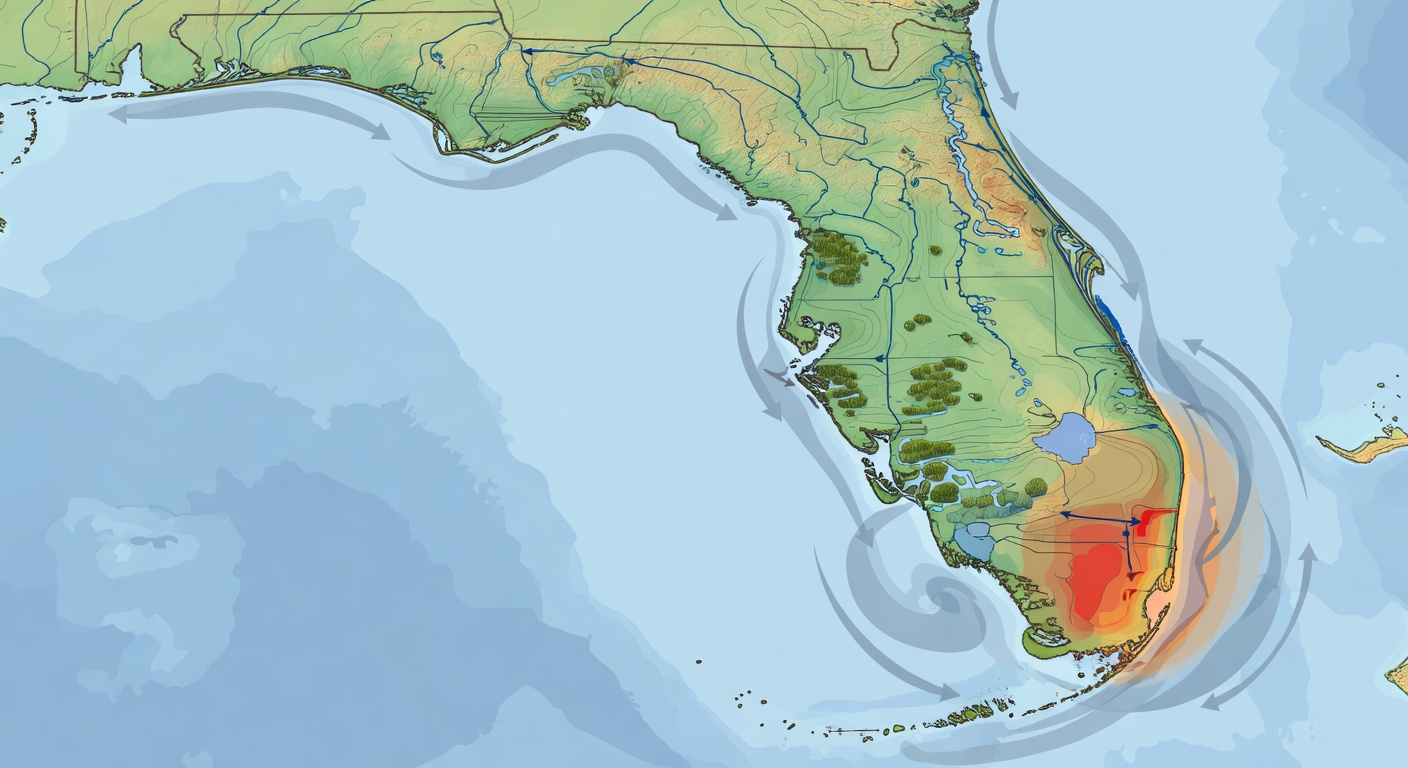
Quick Fact: Florida spans 65,758 sq mi as a peninsula with 8,436 sq mi of waterways, featuring subtropical climate averaging 73°F yearly.
Florida’s peninsular geography creates extensive coastlines vulnerable to sea-level rise, directly impacting real estate and agriculture. Its flat terrain and warm Gulf waters fuel hurricane formation, linking weather patterns to economic resilience needs.
The subtropical climate brings hot summers (90°F+ highs) and mild winters (60°F averages), with 60 inches annual rainfall concentrated June-October. This supports tourism but challenges infrastructure, as seen in flood-prone Miami.
- Coastlines: 1,350 miles total, fostering beaches and ports.
- Climate Zones: Tropical south, humid subtropical north.
- Hydrology: Biscayne Aquifer supplies 90% of South Florida water.
According to NOAA, sea levels rose 9 inches since 1950, pressuring coastal ecosystems interdependent with tourism revenue.
Unique Peninsular Shape and Coastlines
Extending 447 miles south, the peninsula hosts the Florida Reef, third-largest barrier reef globally, protecting $2.7 trillion in coastal assets per USGS.
Subtropical Climate and Hurricane Risks
Hurricanes strike every 4.75 years on average (National Hurricane Center), driving insurance costs 3x national average.
Diverse Ecosystems from Everglades to Keys
Everglades’ sawgrass marshes filter water for 8 million residents, per South Florida Water Management District.
Sources: NOAA Climate Reports (2024), USGS Coastal Data, Florida DEP.
A Brief History of Florida
Quick Fact: Florida joined the U.S. in 1845 after Spanish rule from 1513; St. Augustine (1565) is the oldest continuous European settlement.
Florida’s history from Timucua mound-builders to Space Race innovations shaped its tourism-tech economy, where historical sites now generate millions in visitor spending.
Indigenous populations peaked at 350,000 pre-Columbus, declining 90% post-contact. Spain established forts; Britain traded zones in 1763; U.S. acquired in 1819 Adams-Onís Treaty.
- 1821: Became U.S. territory amid Seminole Wars.
- 1920s: Land boom/bust spurred Everglades drainage.
- 1960s: Cape Canaveral launches boosted aerospace.
Disney’s 1971 arrival transformed swamps into $30B economic engine, linking history to modern growth.
Indigenous Peoples and Spanish Exploration
Calusa engineered shell mounds; Ponce de León sought Fountain of Youth.
Modern Development and Key Milestones
Flagler’s railroads opened East Coast; WWII training bases spurred population boom.
Evolution into a Tech and Tourism Hub
Post-Apollo, simulation industry in Orlando employs 70,000 (Enterprise Florida).
Sources: Florida Historical Society, Smithsonian, NASA History Office.
Major Cities and Regions in Florida
Quick Fact: Florida’s 22M population (2023 Census) concentrates in metro areas; Jacksonville largest at 1.6M MSA.
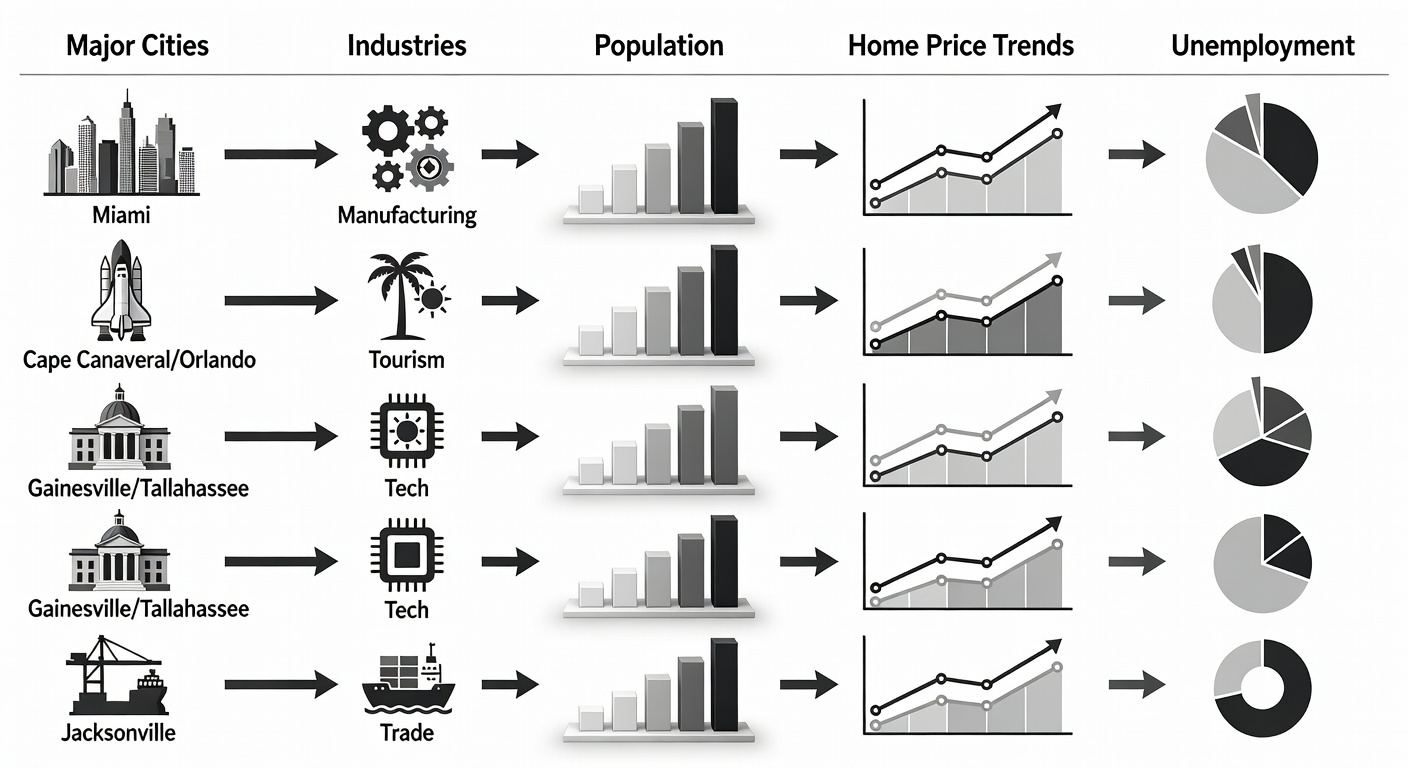
Cities like Miami drive trade, Orlando tourism, linking urban hubs to statewide logistics networks essential for business expansion.
| City | Population (2024 est., Census) | Median Home Price (2024 Zillow) | Key Industries | Unemployment (2024 BLS) | Top Attraction |
|---|---|---|---|---|---|
| Miami | 449,000 | $580,000 | Trade, Finance, Tourism | 3.1% | Miami Beach |
| Orlando | 324,000 | $395,000 | Tourism, Tech, Modeling | 3.0% | Disney World |
| Tampa | 403,000 | $435,000 | Healthcare, Ports, Finance | 2.8% | Ybor City |
| Jacksonville | 985,000 | $335,000 | Logistics, Military, Insurance | 3.0% | Riverside Arts |
Miami: The Gateway to Latin America
PortMiami handles 1.5M containers yearly (PortMiami Authority).
Orlando: Theme Park Capital
75M visitors (Visit Orlando 2023) support 400,000 jobs.
Tampa Bay and Gulf Coast Areas
Port Tampa Bay: 37th U.S. busiest, $30B impact.
Relocators often overlook HOA rules on hurricane shutters; check district filings early to avoid fines, as advised in Florida Realtors guides.
Sources: U.S. Census 2024, BLS Labor Stats, Zillow Research.
Florida’s Thriving Economy and Key Industries
Quick Fact: Florida GDP $1.44T (2023 BEA), 4th U.S.; no income tax saves businesses avg 7% payroll (Tax Foundation).
Tourism and trade interlink with tech growth, where ports feed supply chains supporting IT hardware imports.
Visitor spending hit $112B (Visit Florida 2023), employing 1.7M. Aerospace/Space Coast: $8.9B output (Space Florida). Agriculture: #1 U.S. citrus/oranges.
- International Trade: $140B exports (2023 ITA).
- Life Sciences: 2,500 firms, $25B (Enterpr. FL).
- Construction: Booming from migration.
Hurricanes disrupt but spur recovery tech like predictive analytics.
Tourism Dominance and Space Industry
Kennedy Space Center: 5M visitors, 15,000 jobs (NASA).
Growing Tech Sector in ‘Silicon Swamp’
- Silicon Swamp
- Nickname for Tampa-Orlando corridor cybersecurity cluster, 50,000 jobs (Cyber Florida).
3.5% annual growth (CompTIA 2024).
No Income Tax Advantages for Businesses
Attracts 1,000 relocations yearly (Site Selection Group).
Sources: BEA 2023, Visit Florida, Tax Foundation 2024.
Top Attractions and Things to Do in Florida
Quick Fact: Florida has 1,300+ miles beaches; Disney/Universal draw 60M yearly (TEA/AECOM).
Attractions blend theme parks with nature, boosting local economies via 25% GDP tourism share.
- Theme Parks: 10 largest U.S. in Orlando.
- Beaches: Siesta Key #2 best world (TripAdvisor).
- National Parks: 50 sites incl. Dry Tortugas.
Theme Parks and Family Entertainment
Epcot festivals showcase global cultures.
Beaches and Outdoor Adventures
Kayaking Silver Springs State Park.
Natural Wonders like Everglades and Keys
Key West: Southernmost point buoy iconic.
Sources: TEA Theme Index 2023, NPS.gov.
Cost of Living and Real Estate in Florida
Quick Fact: COL index 102.3 (2024 Missouri Econ.), housing 114; median rent $1,950 (Apts.com).
Post-pandemic influx raised prices 40%, but tax savings offset for relocators; IT pros benefit from remote work flexibility.
- Housing: Inventory 3.5 months supply.
- Utilities: AC drives 15% higher bills.
- Groceries: 98 index, fresh produce cheap.
Avoid pitfall: Underinsuring for windstorm; Florida Citizens policy averages $3,500/year.
Housing Trends Across Regions
Condo conversions in Miami surge 20%.
Taxes and Affordability Compared to Other States
Vs. NY (125 index): 20% cheaper overall.
Factors Influencing Relocation Decisions
Schools rank mid-tier; A-rated districts premium pricing.
Sources: Missouri Economic Research, Zillow 2024, Census ACS.
Wildlife, Environment, and Conservation Efforts
Quick Fact: 700 vertebrates, 4,300 plants; manatee pop 7,500 (FWC 2024).
Red tide algae blooms link to tourism dips, costing $2.8B (2018 NOAA); conservation protects biodiversity economy.
- Panther: 200 wild (USFWS).
- Sea Turtles: 90% FL nesting (FWC).
- Invasive Pythons: 100K+ Everglades hunt.
Iconic Species and Habitats
Manatee sanctuaries Crystal River.
Challenges from Climate Change
1.5 ft rise projected by 2050 (USGS).
Statewide Protection Initiatives
$625M Everglades funding (2024 Legislature).
Sources: FWC Wildlife Inventory, NOAA Fisheries, USGS.
Business Climate and IT Opportunities in Florida
Quick Fact: CNBC #1 Business State 2024; IT jobs 585K, +4.2% growth (CompTIA).
Florida’s workforce (10.5M) and infrastructure attract IT, where hurricanes necessitate resilient cloud solutions like Azure migrations.
Fintech: 400 startups Miami (Knight Foundation). Simulation: $10B Orlando (NSTI).
- Cyber: SOCCENT MacDill 10K jobs.
- Health IT: Lake Nona Medical City.
- Venture Capital: $5B 2023 (FLVCF).
Common challenge: Talent retention; universities supply 25K STEM grads. Best practice: Proactive monitoring reduces downtime 90%, aligning IT with no-tax growth.
In Central Florida, providers like Fox Computer Solutions offer 24/7 support, Azure expertise, and packages for SMEs, ensuring hurricane-proof operations per their 25-year record.
Why Florida Attracts Tech Companies
Quality workforce, ports, lifestyle score 8.5/10 (AreaVibes).
Key IT Hubs and Growth Stats
Tallahassee: GovTech cluster.
Common Challenges and Best Practices for IT Firms
Adopt zero-trust; external backups vs. ransomware.
Sources: CNBC 2024, CompTIA Cyberstates, Enterprise Florida.
Frequently Asked Questions
What makes Florida’s economy unique? (Visit Florida) Tourism ($112B), space ($8.9B), no income tax distinguish it, per BEA 2023.
Is Florida a good place to start an IT business? Yes, #1 CNBC ranking, 585K IT jobs, tax savings ideal for cloud/security firms (CompTIA 2024).
What is the average cost of living in Florida 2024? Index 102.3; housing $420K median, offset by 0% income tax (Missouri Econ.).
How does hurricane season impact life in Florida? June-Nov risks mitigated by codes; insurance key (NHC data).
What are the best cities in Florida for tech professionals? Tampa (cyber), Orlando (sim), Miami (fintech) offer hubs/jobs (Cyber Florida).
Best places to live in Florida? Tampa/St. Pete balance cost/lifestyle; Orlando family-friendly (Niche 2024).
Florida business climate for IT jobs? Booming with VC, universities fueling growth (FLVCF).
Ready to leverage Florida’s IT opportunities? Contact our experts for assessments or generate your personalized IT solution plan aligned with state growth.
